
One day as I was sitting in class, a student asked a question: the market is so saturated right now and it seems like everyone has already written about everything, so what’s the point of writing? It was a question I’d heard variations of many times before, but the answer this student got shocked me.
The professor stood up and said, “I don’t care about your writing. I don’t care about your novel or my short story. I care that my students become good human beings.” Now, I want to give a few disclaimers. I agree that humanity and stories are deeply interwoven. I believe that reading and writing foster empathy, and thinking deeply about ethics and different points of view was one of my favorite parts of being an English major.
And yet, his answer seemed to justify the student’s despair. He agreed that new art itself might be pointless and redundant.
In the introduction of her book on writing, Magic Words, Cheryl Klein writes, “You may disagree with these principles or other techniques put forward in this book, and if so, I hope the conflict will be intellectually and creatively stimulating for you” (p.XIV). In writing this article, I mean no disrespect to either the student or the professor. This is an attempt to find an answer that feels more true to me. I hope reading this will be as “intellectually and creatively stimulating” for you as writing it has been for me.
To start, I want to compare three books that all at least partially stemmed from the same question: what would happen if people could force each other to do or feel things they didn’t want to do or feel?
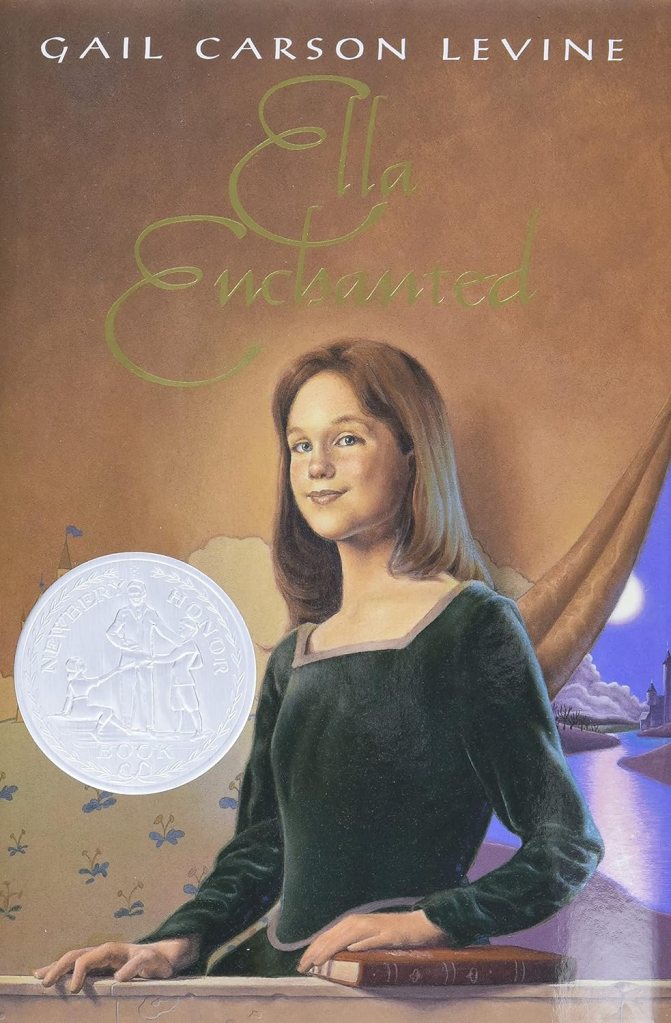
Ella Enchanted is a 60k word middle grade Cinderella retelling. It’s about a girl named Ella who is cursed with obedience at birth, meaning that she has to do whatever anyone tells her to. If an ogre tells her to tie herself up, she’ll grab the rope. If a fairy tells her to be happy about her curse, she’ll instantly grin and go find someone to order her around. If someone tells her to hurt Prince Char, she’ll have no choice but to follow through.
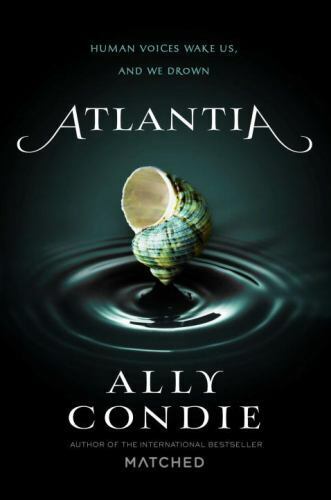
Atlantia is an 80k word YA scifi novel that takes place almost entirely underwater. The main character, Rio, is a siren. This means that her voice has the power to force people around her to do and feel what she wants. But sirens are feared and controlled in Atlantia, so she has learned to use a flat, powerless voice instead and to hide who she really is from everyone.
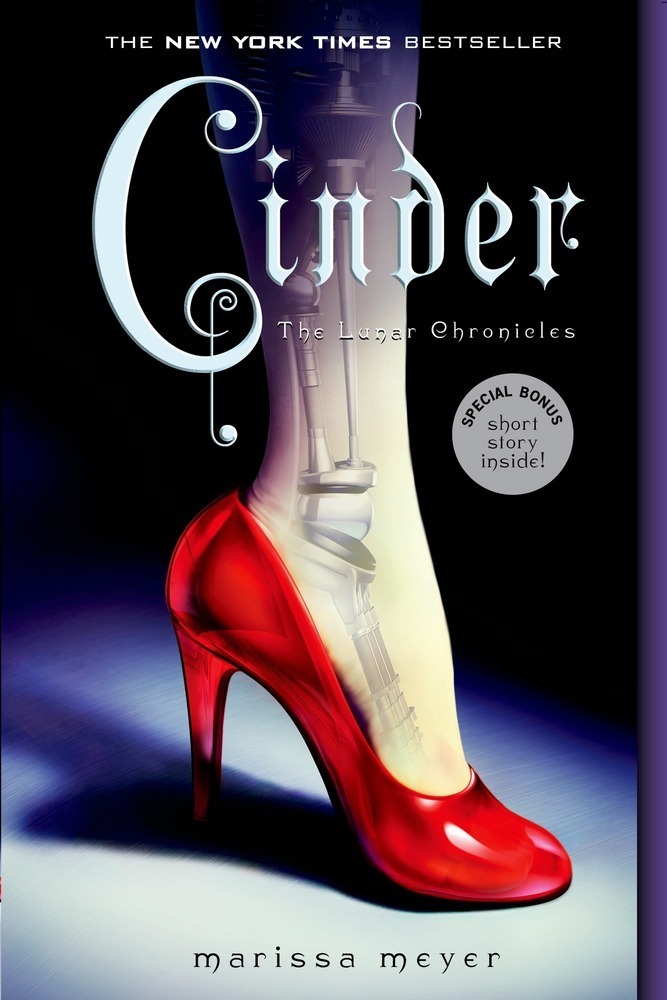
My third example is the Lunar Chronicles book series. It’s a YA scifi fairytale retelling, and the main protagonist (especially of the first book) is another version of Cinderella. Her name is Cinder, and she’s a cyborg. Most Lunars (people from the moon) have something called Glamour that they can use to change what those around them see, think, and feel. At the end of the first book, Cinder finds out that she’s a lost Lunar princess, and that she has that same ability.
These three books (/series) have a lot in common. All three explore the same question. All three feature female protagonists who have to keep an important secret, all three are speculative fiction and explore themes of power and identity.
And yet, no one can argue that they’re the same book. For starters, they approach the central question in such different ways. While in Atlantia and Cinder specific groups of people have the ability to control others, in Ella Enchanted, it’s the opposite. Everyone around Ella (whether well-meaninged or naive or cruel) holds that dangerous power over her. The central aim of the story is for Ella to overcome this curse. Throughout the book she struggles to resist that power in any way she can. This struggle makes her determined and strong in ways no one else can be.
In Atlantia, the main character has this special power over other people, but we never see her intentionally use it until very late in the book. Because of her society and her fear of who she is, she feels powerless. She has to accept herself, including her voice, in order to save everyone and accomplish her goal of getting Above.
Cinder’s relationship with power is an interesting one. The Glamour of others fools her human half, but not her robot half, so often she’s able to see the truth and resist manipulation when others can’t. Like Rio, she’s had the ability to manipulate others the whole time, but unlike her, she only finds this out at the end of the first book. Dealing with Glamour isn’t as main of a conflict in the story as dealing with having the Curse and being a Siren are in the others, but learning to use Glamour in intentional ways is important to Cinder’s arc and her acceptance of her role on Earth and Luna.
Aside from taking different approaches to the theme, the stories also take place on different worlds (medieval with magical creatures versus in the ocean versus in a high-tech scifi world) populated by different characters. Ella is fantastically witty. Rio is intensely loyal to her sister. Cinder is fiercely determined. And the authors’ voices are completely different.
Here’s the first sentence of Ella Enchanted: “That fool of a fairy Lucinda did not intend to lay a curse on me.” We can tell immediately that the book will have all of Levine’s trademark humor and warmth, and that Ella has strong opinions that she’s not afraid of voicing (either aloud or in the narration).
Compare that to Atlantia’s first line: “My twin sister, Bay, and I pass underneath the brown- and turquoise-banners hanging from the ceiling of the temple.” Condie’s voice will be more descriptive, more lyrical, more contemplative.
Here’s the first line of Cinder: “The screw through Cinder’s ankle had rusted, the engraved cross marks worn to a mangled circle.” Meyer’s voice, while descriptive, is straight to the point and pragmatic, just like Cinder.
So while the broad, sweeping strokes of these stories are similar, the specifics are wildly different. Each has specific details that make it utterly unique. It’s those same details that make them come alive.
We could do the same process with other similar books too. I could have compared Atlantia and Dark Life (which both take place underwater) or Ella Enchanted, Cinder, and Just Ella (Cinderella retellings) or Alcatraz Versus the Evil Librarians and A Series of Unfortunate Events (tragedies with noisy narrators and orphans trying to uncover a mystery their parents were involved in).
In some ways, yes, every idea has probably been written about before. Humans have been telling stories for a long time. But so what? I bet it hasn’t been told the specific way you would tell it. Maybe you have a fun voice or deep character or unique world that the idea has never been combined with before. Maybe writing the story will teach you something new or touch a reader in a way that no other story ever has. In my opinion, this fear of never having a unique idea is no reason to stop writing, not if it’s what you love. And for the record, yes, I hope the process of writing will help make you a better human being.


Leave a Reply