
I learned so much from my post on original ideas that I decided to do a whole series in which I compare vastly different (but somehow still deeply similar) books. This post is about another surprising pairing: Words of Radiance (the second book in the Stormlight Archive) and The Nest (Kenneth Oppel’s standalone middle grade horror). Both of these books are masterfully written and have a lot going on, so I’ll only compare one character’s arc from each book and hopefully learn some more cool stuff in the process! Just like in the ideas post, I’ll summarize the basics, then talk about the differences and similarities.
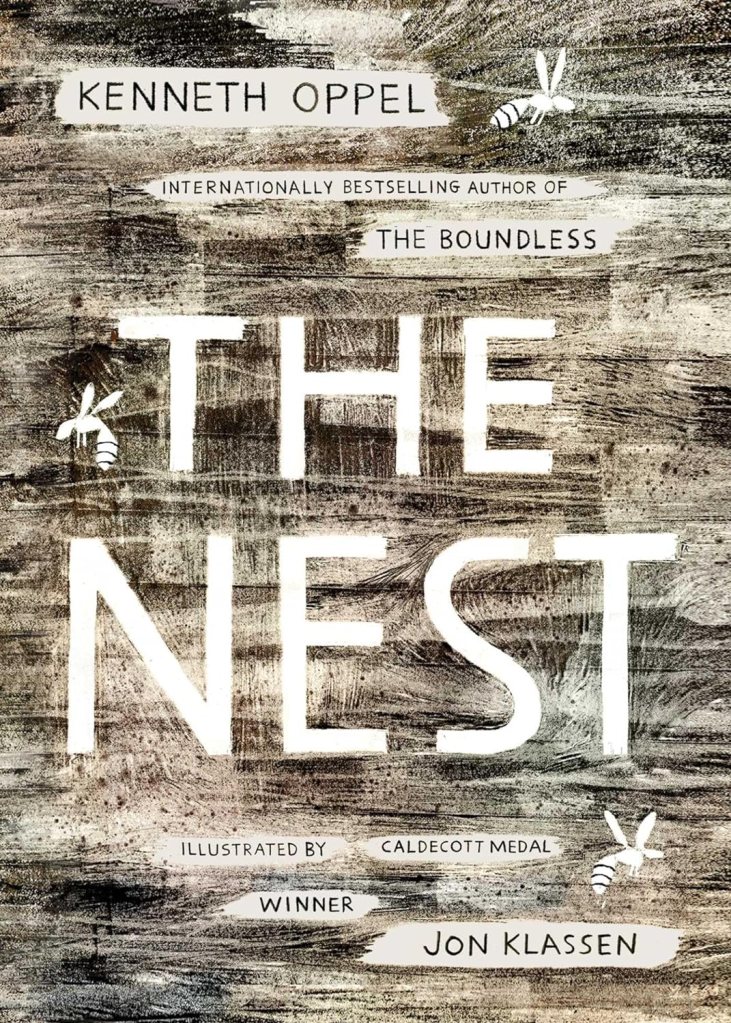
The Nest is a MG horror novel about a kid named Steve. His baby brother is constantly in and out of the hospital because of a congenital condition. One day Steve is stung by a wasp, finds out he’s allergic, and starts having strange dreams in which an angel claims to be able to fix the baby.
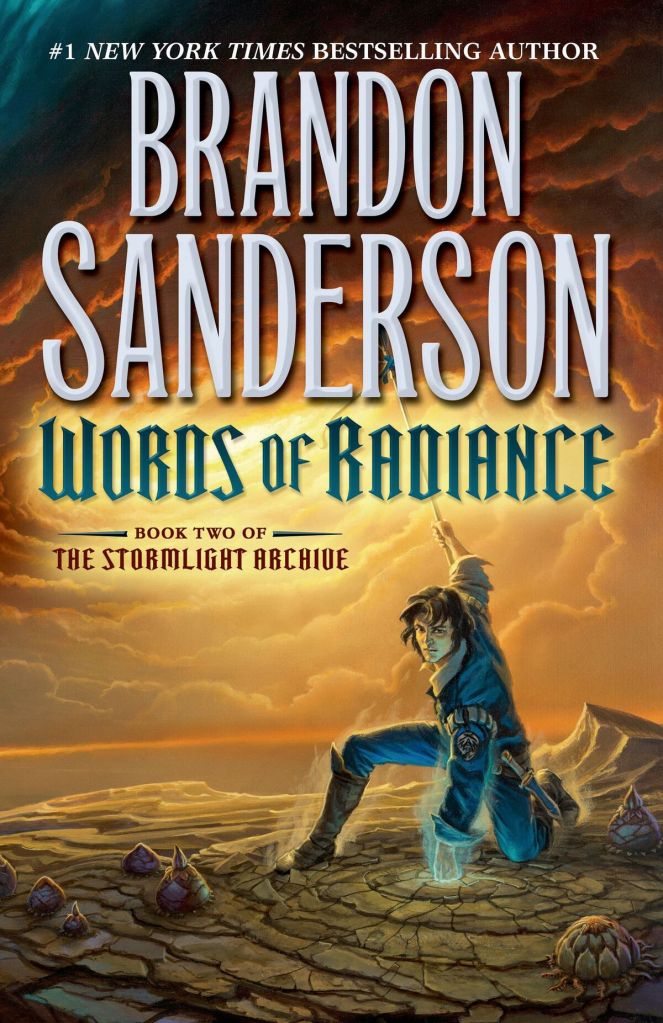
Words of Radiance is a complex epic fantasy novel, and the second in a series. Though it has many cool arcs, for the purpose of this post, we’ll focus on Kaladin’s character arc. In the first book we learn that Kaladin has been betrayed by a high-ranking lighteyes in the past, which has led to some serious trust issues. Now, his job is to guard some of the highest ranking lighteyes in the kingdom—including the king.
Okay, let’s take this one plot point at a time.
1. Establishing the MC as a protector
Steve is an earnest, responsible boy who struggles with anxiety and OCD. One of the rituals that helps him calm down and feel safer involves lists. Each night before he goes to bed, he reads off each item on his list of things he’s grateful for and each name on his list of people he wants to keep safe. Though he has an irrational fear that he will catch what the baby has and he never calls the baby by his name (Theo), as if he’s already given up on it living, the baby features on both lists. Though his emotions are complicated, Steve wants to protect his brother.
From the first Stormlight book, we know that protecting those he loves is Kaladin’s central desire and a huge part of his character. The only problem is, doing so is much easier said than done and failing to protect often pushes him deeper into depression. His new profession as bodyguard and his haunting regret that he wasn’t able to protect everyone demonstrate that protecting will be a central aim of the second book too.
2. Establishing the conflict
The plot of The Nest really starts when Steve dreams about the wasps outside his house. At first he thinks they’re angels, because he can’t see them clearly and the queen promises to fix the baby. One of Steve’s obstacles to protecting the baby is the queen’s obscure language. Over and over again she says things like, “These are just words, really. Let’s not get hung up on them” (p. 50) and “[names] don’t really mean anything in the end” (p. 75). Still, Steve is curious, and eventually he finds out that the queen plans to grow a new baby to replace his brother. But even then, it’s not immediately clear that what the queen is doing is wrong. She tells him the new baby is his brother, only perfect. She also acts as a voice of despair, telling him that his Theo will die, and that having her baby is better than having no baby. On top of everything, he’s not sure if his dream conversations are real, or just dreams.
Kaladin’s arc kicks off when Amaran, the lighteyes who betrayed Kaladin and killed his men in the first book, shows up at the war camps where Kal is serving and is immediately accepted by the lighteyes Kaladin has tentatively come to trust (Dalinar). At the same time, someone on the inside is trying to assassinate the king, and Kaladin needs to make sure they don’t succeed.
Partway through the book, Kaladin discovers that the guard giving the assassin access to the king is Moash, who was “as close to a real friend as Kaladin had known since being branded” a slave in the previous book (p.93). Kaladin’s gut response is to tell Moash to stop, but he reluctantly agrees to hear him out. Moash and his murderous friends tell Kaladin that the king is terribly incompetent and that he gets good people (including Moash’s parents) killed.
At this point Kaladin, too, is confused. He wants revenge on Amaran for what he did to him, but those thoughts push him deeper into his dark spiral. He wants to trust the high-ranking lighteyes he’s entrusted himself to, but he worries Dalinar will betray him the way Amaran did. He wants to do his job, but he also worries Moash is right and the king should be killed. These darker thoughts make it harder to use his magical powers, which in turn makes it harder to protect those he loves.
3. The Decision: Yes
One night, the queen tells Steve she needs his help to fix the baby, and all he has to do right now is say yes. She attacks him with vagueness, with despair, with promises of happiness.
“‘All you have to do is say yes, Yes to the end of suffering and heartbreak. Yes to making your mother and father happy. Yes to making a better life for everyone.’
“I thought, It’s just a dream anyway.
“I thought, It has no power over me.
“I thought, Why not?
“‘Fine,’ I whispered.”
On page 132, Steve agrees to help the queen replace the baby, though he doesn’t know how yet.
Kaladin struggles with his opposing voices for weeks, not agreeing to help with the assassination, but not turning Moash in either. In a climactic moment, Kaladin challenges Amaran to a duel. He sees it as a better way to get revenge on Amaran (as opposed to murdering him) and as a leap of faith (Dalinar will support him, right?). Instead, the king throws him in the dungeon for challenging a lighteyes and ensures that the duel will never happen.
Alone in a dark cell, Kaladin’s internal voices of despair, anger, and fear run wild. When he is set free, one of the first things he does is find Moash and tell him he’ll help assassinate the king. With that decision, he completely loses access to his magic.
4. The Decision: No
In time, Steve finds out that he agreed to open the window into the baby’s room and to remove the window screen. “That’s all. We’ll do the rest. That’s not so hard, is it?” (p. 147) But the thing is, the baby doesn’t get worse, as the queen predicted. Instead, he’s gotten strong enough for surgery. So now that Steve sees a ray of hope, he tries to back out of the agreement. The same queen that chides him for “these silly terms you use” (p. 175) tells him that he can’t back out, because he already said yes and “yes” is a powerful word.
Steve pushes her on the question he always comes back to: what will happen to the old baby? Finally the queen reveals that her wasps will eat the baby once they’ve replaced him.
Now, Steve makes his true decision. Through interactions with others, he’s learned that no one’s “normal” and that everyone has broken bits inside them. The perfect baby wouldn’t be able to empathize. “It couldn’t, because it was so perfect that it wouldn’t even understand what it was like not to be perfect. It could never know weakness or fear” (p. 179). In other words, his sick, broken little brother is worth saving.
Steve shouts, “I’m not helping… I-do-not-say-yes!” (p. 180)
Due to a series of unfortunate events (hah), Kaladin finds himself badly injured and bedridden while Dalinar and most of Kal’s men go off on a dangerous mission. One of Kaladin’s men, however, stays behind to help the king’s guard protect the king. This man is Moash.
Moash comes to visit Kaladin and tells him that the plans are in place and that all he has to do is stay out of the way.
Depressed and unable to find peace, Kaladin receives the advice, “Choose the option … that makes it easiest to sleep at night” (p. 1178). He realizes that the king is trying his best and that Kaladin doesn’t want to be the kind of person to murder people in dark alleys. Not even really knowing what he’s doing, Kaladin limps his way up to the palace and to the king’s room.
He’s decided to protect the king.
5. The Battle to protect
The next day, the queen contacts Steve while he’s awake and tells him it’s time. Determined to protect his little brother, Steve again affirms that he won’t open the window. In fact, he runs through the whole house and makes sure all the windows are closed and locked.
The battle begins. Armed with duct tape, wasp spray, a fly swatter, and a magical knife that was given to him earlier in the story, Steve fends off giant swarms of wasps. But there are too many of them and they corral Steve and the baby into the bathroom, where they finally get through his defenses to sting him.
Whole body swelling up from his many stings, Steve curls around the baby, trying to keep it from getting stung, carried out, or eaten.
As his body begins to die, the battle is transported to inside the dream space where Steve has interacted with the queen all along. He learns that he must kill her to stop the swarm and protect his brother.
But the queen, his size in the dream space, stabs him in the chest with her stinger. Steve feels his heart beating more slowly and knows he’s going to die.
Then he thinks about Theo and decides to keep fighting anyway. He kills the queen and wakes up in the hospital.
After limping to the castle, Kaladin finds the king drunk. He gets him on his feet and past some of the assassins and is soon confronted by Moash. Just as the wasp queen likes to do to Steve, Moash tries to talk Kaladin out of resisting. Kal lifts his spear into position anyway, but Moash further injures him, and he collapses.
As Kaladin lays there, he commits to protect even those he doesn’t like, as long as it’s the right thing to do. He forces himself back to his feet, though at this point he can’t even keep hold of his knife. Moash is shocked he’s even able to stand.
With this commitment, Kaladin’s magical abilities come back (and then some), and what follows is one of the coolest fight scenes I’ve ever read. Kaladin easily defeats those assassins, hides the king, and flies out to where his friends are to save Dalinar’s life. From a different assassin.
6. Resolution and Change
When Steve wakes up, he finds out that he was dead for exactly twenty-five seconds, but he accomplished his goal. Despite the thousands of wasps, Theo was only stung twice.
After the ordeal, Steve no longer feels the need to go through each name on his lists. He’s faced his fears and learned that it’s okay to be different from other people and to feel a little broken sometimes.
In order to save the king and Dalinar, Kaladin had to reveal his magical abilities, which for him was the ultimate show of trust. No one tries to take the magic from him now that they know, and everyone is safe (for the moment). Kaladin knows who he wants to be and is preparing to accept his expanded responsibilities as a protector.
Analysis
We’ve come to the crux of it all. The arcs of these two characters, while different in the details, are extremely similar in the main points. Why? Why did Sanderson and Oppel make the decisions they did in crafting their character arcs?
Well, both of these are what Jessica Brody calls institutionalized stories (for a more in-depth look at institutionalized stories, read Save the Cat! Writes a Novel). These stories center around the decision to either join, leave, or take down “the institution” (in these cases the wasps and the assassins). Other institutionalized stories include The Firm, The Outsiders, and most (if not all) dystopians. Main characters in these stories need a big enough reason to reject the institution, and since both Steve and Kaladin are protectors at heart, that reason had to come back to protecting.
My favorite part of these arcs is #3 The Decision: Yes. It’s not part of Brody’s institutionalized template, but its inclusion makes both stories more powerful. Imagine if Steve knocked down the wasp nest right after finding out the queen planned to replace his brother or if Kaladin went straight to Dalinar after Moash confessed to helping the assassins. Because both characters agreed to join the institution first, there was more motion and suspense in the stories, and the payoff was so much more sweet.


Leave a Reply